an archive of all images for the research project on food technology advertisements
Frozen Vitamin E
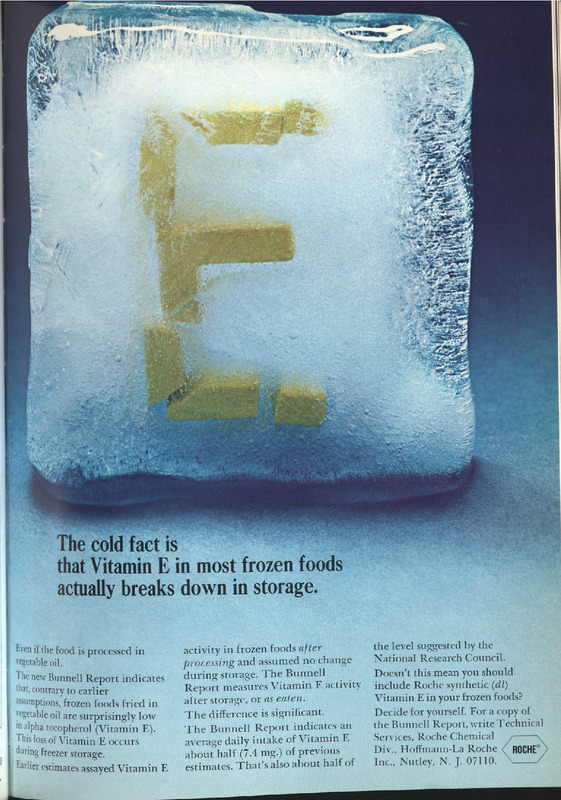
[alt text]
A broken yellow letter “E” frozen in an ice cube.
[transcription]
# The cold fact is that Vitamin E in most frozen foods actually breaks down in storage.
# Even if the food is processed in vegetable oil. The new Bunnell Report indicates that, contrary to earlier assumptions, frozen foods fried in vegetable oil are surprisingly low in alpha tocopherol (Vitamin E). This loss of Vitamin E occurs during freezer storage. Earlier estimates assayed Vitamin E activity in frozen foods after processing and assumed no change during storage. The Bunnell Report measures Vitamin E activity after storage, or as eaten. The difference is significant. The Bunnell Report indicates an average daily intake of Vitamin E about half (7.4 mg.) of previous estimates. That's also about half of the level suggested by the National Research Council. Doesn't this mean you should include Roche synthetic (dl) Vitamin E in your frozen foods? Decide for yourself.
# ROCHE
[additional notes]
The image shows that Vitamin E breaks down in cold temperatures.