[alt text]
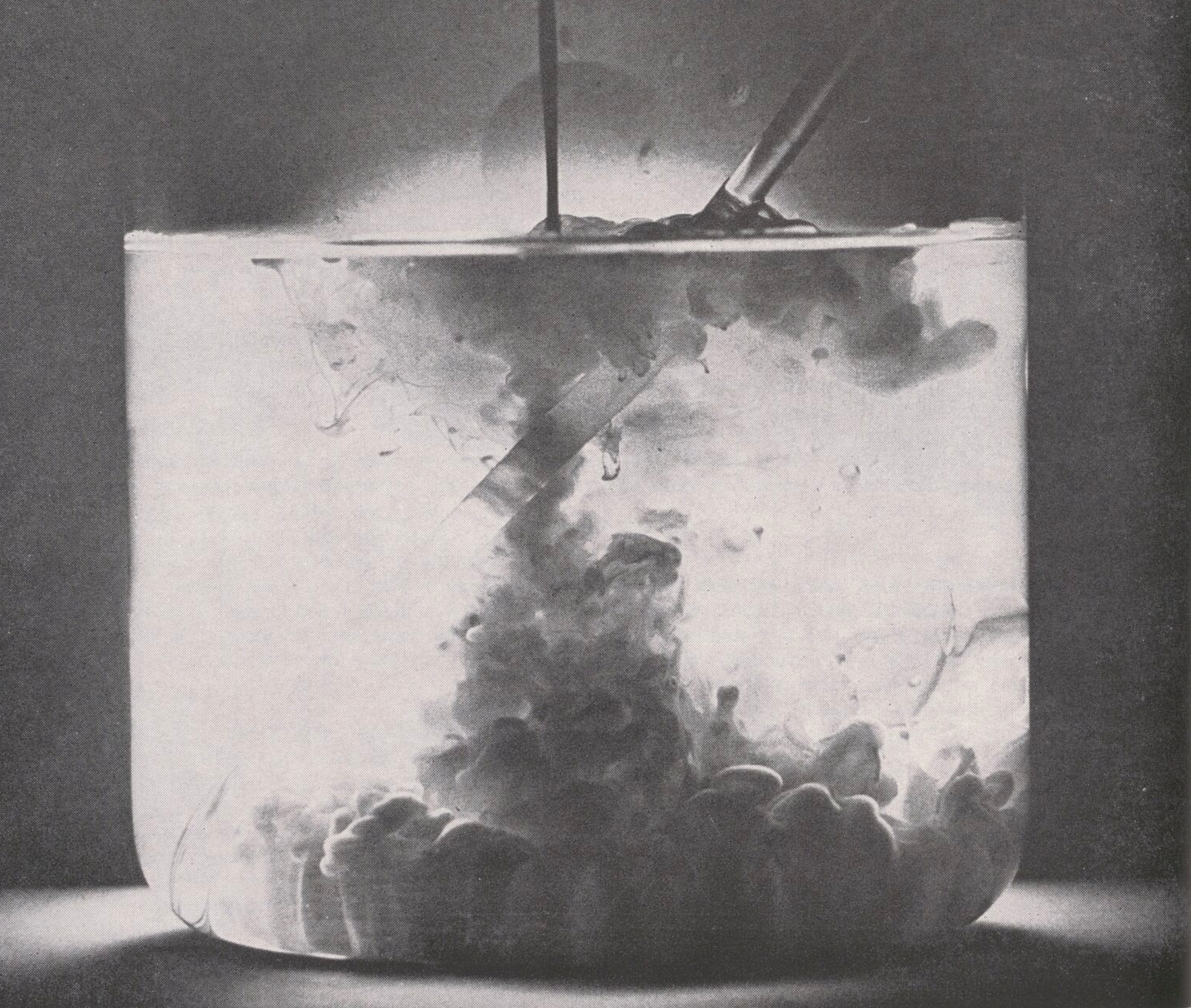
Photograph showing liquid being poured from laboratory beakers embedded in a block of ice to demonstrate chemical flow at low temperatures.
[transcription]
(Image caption:)
Frozen in a block of ice, an ester made from Emery low titer oleic acid still flows freely. Its counterpart, made from standard oleic, has solidified.
Low titer oleic acids from Emery Industries cost no more than standard grades. You can improve your oleic-based product by substituting a more liquid oleic acid without increasing your material cost one cent.
Low titer, high quality.
Small differences in titer translate to big differences in pour points and cloud points of intermediates. A glycerol monooleate made with Emery’s Emersol® 221 Low Titer Oleic Acid, for example, will have a pour point of about 15°F — half that of the same ester prepared with standard oleic. Similarly, sorbitan monooleate prepared with low titer oleic acid will have a cloud point of 16°F — fully 30 degrees less than the same compound made from standard oleic acid.
The greater liquidity these differences illustrate first of all means product improvements ranging from more creamy ice cream to better low temperature lubricant performance to bottled shelf goods that retain their clarity when temperatures drop. Secondly, it means less heat energy wasted to maintain liquidity during handling and storage.
Add to these benefits Emery’s consistent quality and on-time delivery in virtually any volume. To find out more, just use the coupon.
Fatty & Dibasic Acids Group
Emery Industries, Inc.
Cincinnati, Ohio 45202
EMERY
Uncommon Chemicals
[additional notes] - Violet Webber
I liked this ad because of the creativity of freezing the beakers to show the product’s use. The frozen block of ice functions almost like a laboratory proof-of-concept, allowing viewers to understand the advantage of lower pour points without interpreting data.
The imagery emphasizes control over environmental limits, particularly temperature. Chemical refinement allows for products to overcome natural constraints such as cold and solidification. This aligns with industrial priorities involving storage, transport, and product stability across climates.
Interestingly, everyday consumer products like ice cream and bottled goods are mentioned alongside industrial lubricants, highlighting how fatty acid intermediates connect food systems, manufacturing, and mechanical technologies.
Reduced heating requirements during storage and handling subtly position the product as economically and operationally efficient, reflecting growing industrial awareness of energy costs during the late 1970s–early 1980s period.
Emery Uncommon Chemicals appears to have been part of the global chemicals manufacturer Emery Oleochemicals. The company describes how its focus changed from basic chemicals to uncommon chemicals to specialty chemicals.
Oleic acid is a common, monounsaturated omega-9 fatty acid found in olive oil, avocados, and various animal fats. It has dietary, industrial, and cosmetic uses. As a monosaturated fatty acid, oleic acid exists as a colorless to pale yellow, oily liquid at room temperature. Low titer refers to a specific grade of oleic acid with reduced saturated fatty acid content, allowing it to remian liquid at lower temperatures.
https://www.emeryoleo.com/sites/default/files/2019-11/emery-175-ebook.pdf
https://www.emeryoleo.com/oleobasics/emersol-oleic-acids
https://pubchem.ncbi.nlm.nih.gov/compound/Oleic-Acid